From Biological Processes to Scalable System Solutions
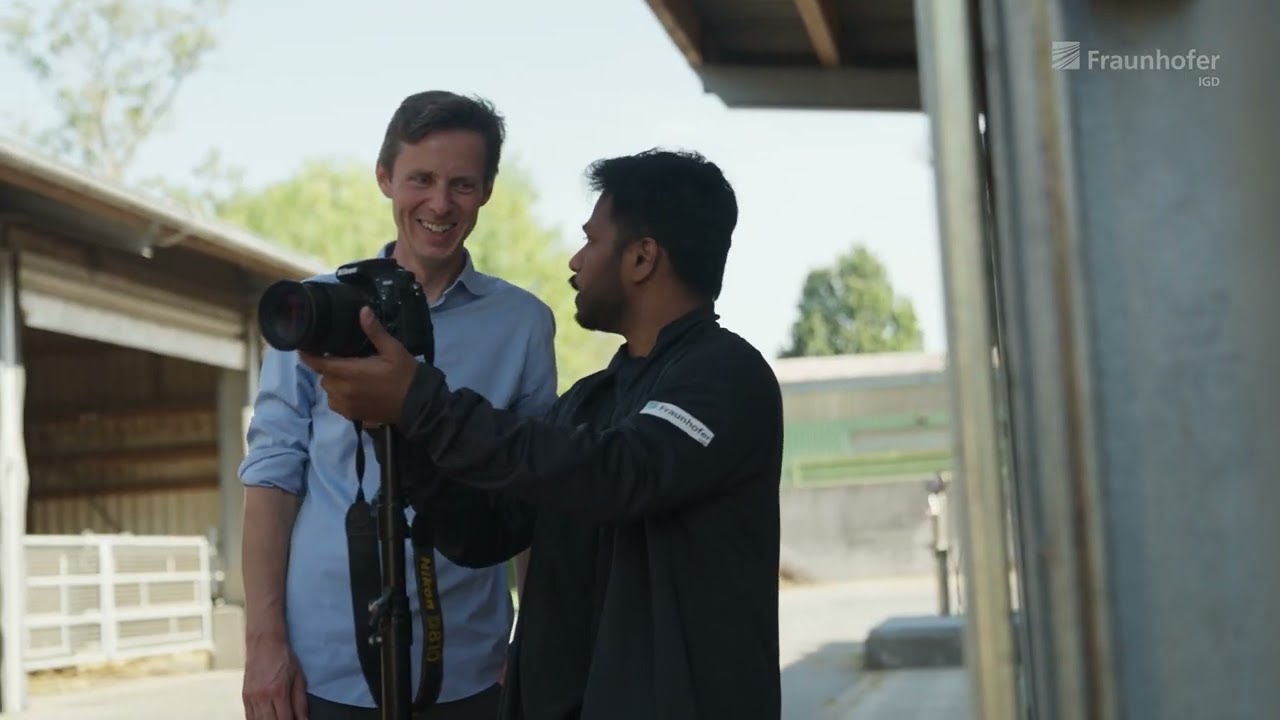
Research activities in the Livestock field arise from concrete practical needs and are developed jointly with agricultural farms, industry partners, and research institutions. The starting point is real-world questions from different production contexts, which are analyzed under practical conditions and addressed in close coordination with the involved stakeholders.
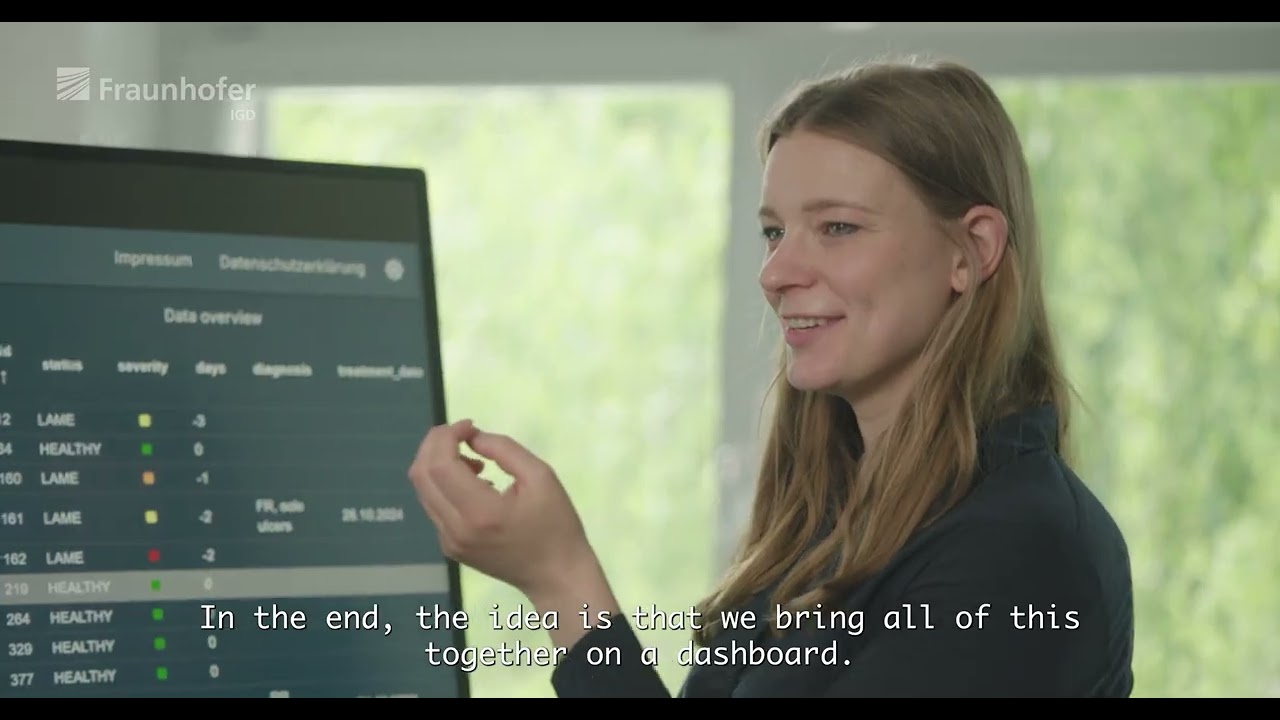
A central objective is the translation of complex biological processes into reliable and usable information. To achieve this, imaging sensors, optical measurement techniques, and AI-supported analysis approaches are applied. The solutions developed are non-invasive, suitable for continuous use, and designed so that they do not interfere with ongoing operations.
Across all production and husbandry systems, the focus lies on the continuous observation and reliable evaluation of animal-related conditions. Digital methods automatically capture physiological, behavioral, and activity-based characteristics, enabling early detection of changes and interpretation within their biological context.
These condition assessments form an essential basis for herd and husbandry management. They support the continuous adjustment of housing conditions, feeding regimes, stocking densities, and management routines, and help identify deviations at an early stage so that they can be addressed in a targeted way. As a result, management shifts from reactive interventions toward continuous, condition-based control.
A key design principle is the modular structure of the systems. Individual methods are developed so that they can function both as standalone applications and as components of integrated monitoring and management solutions. Testing takes place under real-world conditions in different production environments in order to consider robustness, transferability, and scalability from the outset.
At the same time, animal-related conditions are recorded and evaluated in a way that ensures comparability across time periods, animal populations, and production systems. This comparability allows biological variability to be distinguished from systemic effects, enables the classification of developments, and facilitates the transfer and scaling of digital solutions beyond individual sites.
The resulting information is not only relevant for operational management but can also be used beyond individual farms—for example to support audits and certifications, accompany approval and reporting procedures, or enable transparent communication along supply and marketing chains.
Projects in the Livestock field are therefore designed as exemplary implementations: they address concrete application cases while being methodologically structured so that the underlying approaches can be transferred to other species, husbandry systems, and production contexts.
 Fraunhofer Institute for Computer Graphics Research IGD